A February Watering Guide for Indoor Hyacinths: Key Points
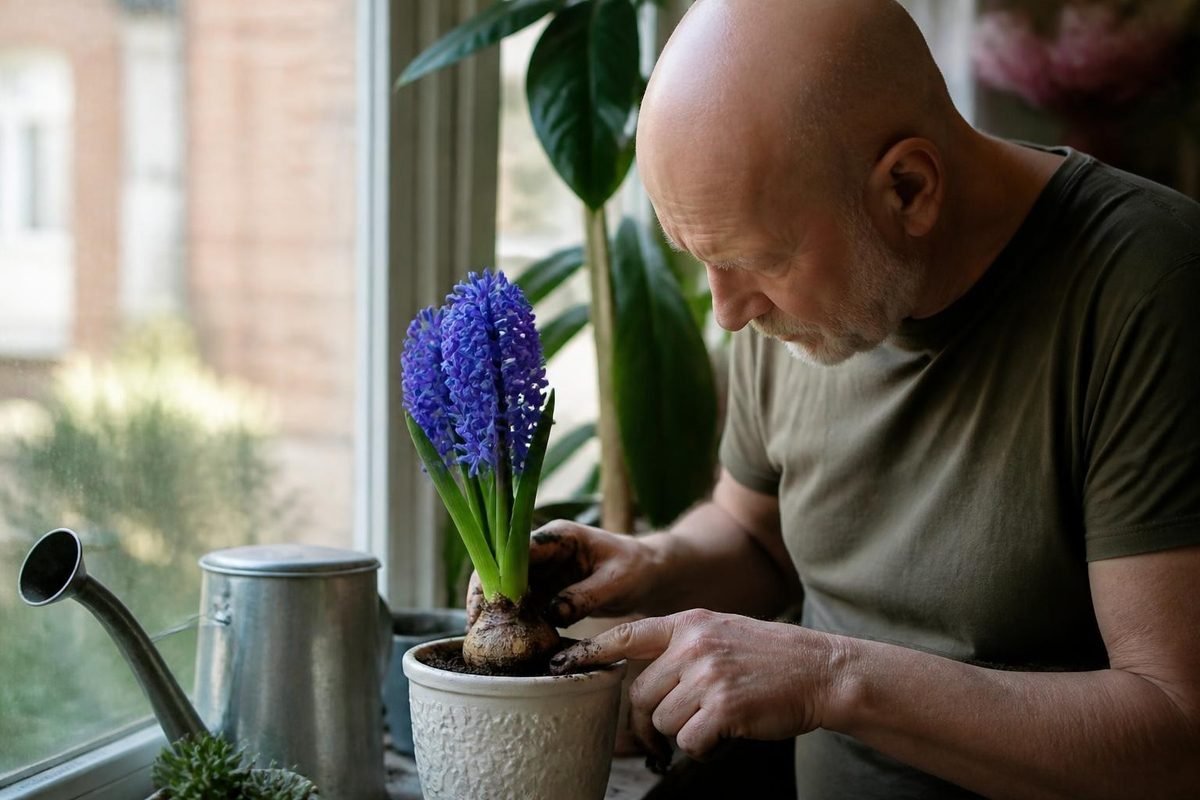
In February, water a soil-grown indoor hyacinth when the top of its potting mix feels dry, and allow extra water to drain out. Aim for slightly moist soil rather than soggy soil, and keep water off the bulb itself.
Test the potting mix first
Press a finger into the mix close to the pot’s edge. When the surface feels dry, water the plant; if it still feels moist, leave it for another day or two before checking again.
Use the condition of the soil, not a regular timetable, to decide when to water. A small container can dry out sooner than a larger one, while soil in a warm room may lose moisture faster than soil in a cool room. Check more often if the plant sits beside a radiator. February by itself does not determine how much water an indoor hyacinth needs.
Pour slowly around the inside edge of the pot instead of over the visible bulb or into the middle of the leaves. Stop once water comes through the drainage holes. Give the pot time to drain, then pour away any water collected in its saucer or decorative cover.
A pot without drainage holes needs a gentler touch. Check the soil before adding water, and add only a little at a time. Since extra water cannot escape, the bulb may be left in wet soil. If the plant is in a removable nursery pot inside a cover, take the inner pot out to water it and let it drain before putting it back.
Set the water level for bulbs in vases
Some indoor hyacinths are grown in slim glass vases, with water rather than potting mix. Keep the water just below the bulb’s base so its roots can reach it. Do not allow the bulb itself to rest in water.
Look at the water level regularly and add more when needed. If the water turns cloudy, pour it out and refill the vase with fresh water, taking care not to tug or disturb the roots. If residue has collected on the inside of the glass, clean the vase before adding fresh water.
As the plant grows, keep it somewhere cool and bright. Water in a warm room may evaporate sooner, so check the vase more frequently there. It does not need to be filled right up to its rim.
Change your routine once blooms fade
After the flowers have faded, cut away the finished flower stalk, but leave the green foliage. The leaves continue supplying food to the bulb as long as they remain green.
For a hyacinth growing in a pot, keep checking the soil and water when its surface dries. As the leaves yellow and die back, reduce watering little by little. After all the foliage has died, stop watering the bulb while it is dormant.
For a bulb growing in water, keep the water below the bulb and make sure its roots do not dry out while the leaves are still green.
Throughout February, use the soil or the vase’s water level to guide your care. A brief check of the plant is more helpful than following the calendar.
Keep reading: how a florist keeps customers